

Department store chain Kohl’s (NYSE:KSS) met Wall Street’s revenue expectations in Q2 CY2026, but sales were flat year on year at $3.52 billion. Its GAAP profit of $1.28 per share was significantly above analysts’ consensus estimates.
Is now the time to buy Kohl’s? Find out in our full research report.
Kohl’s (KSS) Q2 CY2026 Highlights:
- Revenue: $3.52 billion vs analyst estimates of $3.5 billion (flat year on year, in line)
- EPS (GAAP): $1.28 vs analyst estimates of $0.58 (significant beat)
- Operating Margin: 7.4%, in line with the same quarter last year
- Free Cash Flow Margin: 25.7%, up from 14.3% in the same quarter last year
- Market Capitalization: $2.00 billion
Company Overview
Founded as a corner grocery store in Milwaukee, Wisconsin, Kohl’s (NYSE:KSS) is a department store chain that sells clothing, cosmetics, electronics, and home goods.
Revenue Growth
A company’s long-term sales performance is one signal of its overall quality. Any business can put up a good quarter or two, but the best consistently grow over the long haul.
With $15.43 billion in revenue over the past 12 months, Kohl’s is one of the larger companies in the consumer retail industry and benefits from a well-known brand that influences purchasing decisions. However, its scale is a double-edged sword because there is only so much real estate to build new stores, placing a ceiling on its growth. For Kohl’s to boost its sales, it likely needs to adjust its prices or lean into foreign markets.
As you can see below, Kohl’s struggled to generate demand over the last three years. Its sales dropped by 4.6% annually as it closed stores and observed lower sales at existing, established locations.
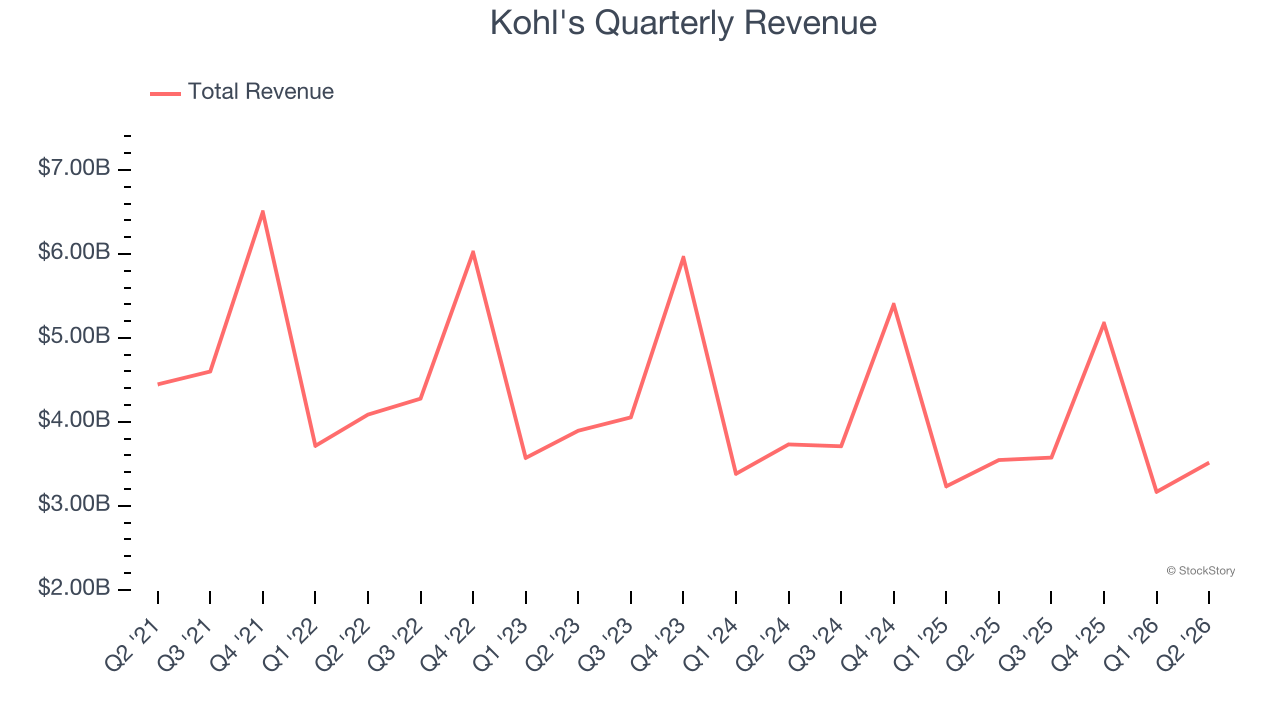
This quarter, Kohl’s $3.52 billion of revenue was flat year on year and in line with Wall Street’s estimates.
Looking ahead, sell-side analysts expect revenue to remain flat over the next 12 months. Although this projection implies its newer products will spur better top-line performance, it is still below average for the sector.
WHILE YOU’RE HERE: The Next Palantir? One satellite company captures images of every point on Earth. Every single day. The Pentagon wants it. Hedge funds are using it to beat earnings. You’ve probably never heard of it.
This is what the early days of Palantir looked like before it became a giant. Same playbook. Different technology. If you missed Palantir, you need to see this. Claim The Stock Ticker for Free HERE.
Store Performance
Number of Stores
A retailer’s store count influences how much it can sell and how quickly revenue can grow.
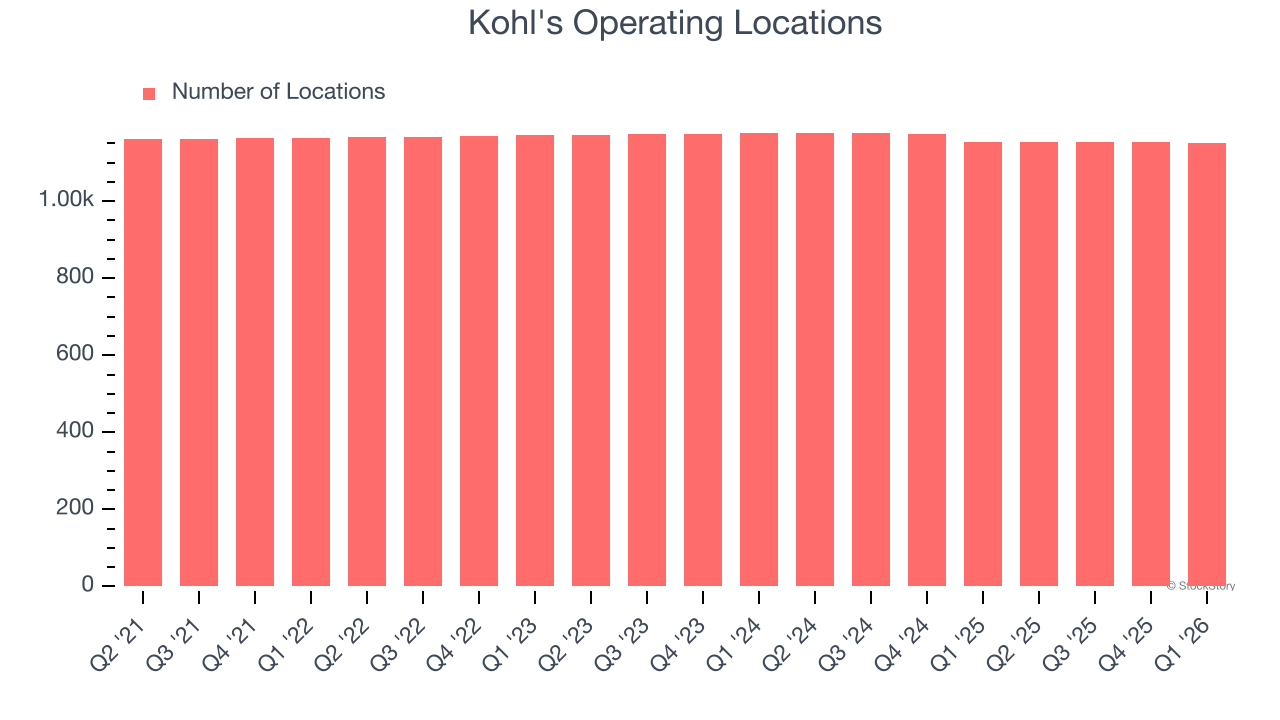
Kohl’s has generally closed its stores over the last two years, averaging 1.1% annual declines.
When a retailer shutters stores, it usually means that brick-and-mortar demand is less than supply, and it is responding by closing underperforming locations to improve profitability.
Note that Kohl’s reports its store count intermittently, so some data points are missing in the chart below.
Same-Store Sales
The change in a company’s store base only tells one side of the story. The other is the performance of its existing locations and e-commerce sales, which informs management teams whether they should expand or downsize their physical footprints. Same-store sales provides a deeper understanding of this issue because it measures organic growth at brick-and-mortar shops for at least a year.
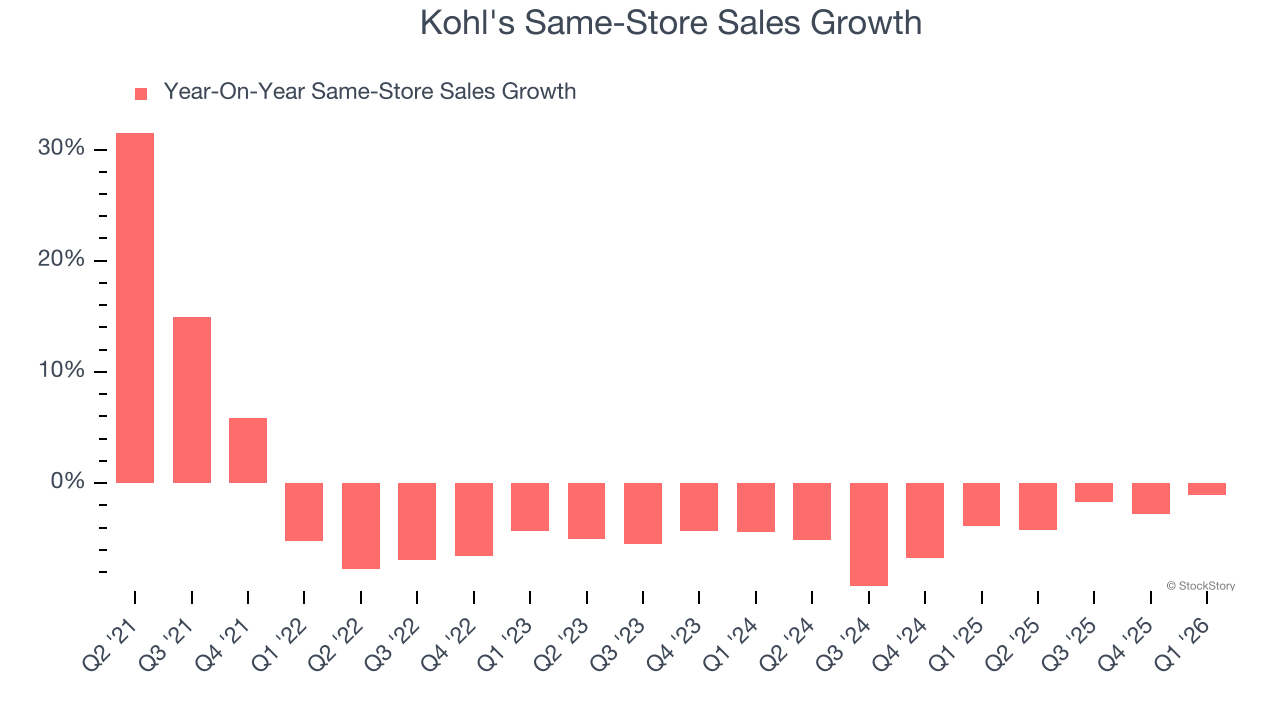
Kohl’s demand has been shrinking over the last two years as its same-store sales have averaged 4.2% annual declines. This performance isn’t ideal, and Kohl’s is attempting to boost same-store sales by closing stores (fewer locations sometimes lead to higher same-store sales).
Note that Kohl’s reports its same-store sales intermittently, so some data points are missing in the chart below.
Key Takeaways from Kohl’s Q2 Results
It was good to see Kohl’s beat analysts’ EPS expectations this quarter. We were also excited its gross margin outperformed Wall Street’s estimates by a wide margin. Zooming out, we think this quarter was mixed. Investors were likely hoping for more, and shares traded down 5% to $16.79 immediately following the results.
Is Kohl’s an attractive investment opportunity right now? The latest quarter does matter, but not nearly as much as longer-term fundamentals and valuation, when deciding if the stock is a buy. We cover that in our actionable full research report which you can read here (it’s free).
Source link
Author

- Ytv Market News
- Share-market news writer and analyst with deep experience covering equities, commodities, forex, and cryptocurrencies for readers in the USA, UK, Canada, and Australia. Ytv Market News delivers timely market updates, practical trading insights, and clear explanations of macro and company-level catalysts that move prices. Combines on-the-ground financial reporting with technical analysis, using concise charts and actionable ideas to help investors and traders make smarter decisions.
Latest entries
 Investing InsightsAugust 26, 2026Full Acquisition Tax Exemption for Converting Vacant Commercial Properties to Housing… Measures to Block High-End Home Tax Avoidance
 GermanyAugust 26, 2026European shares edge higher as oil falls; Nvidia earnings in focus
 Crypto NewsAugust 26, 2026After dip, Bitcoin eyes $83K
- CanadaAugust 26, 2026Aug 25, 2026, 11:00 ET
/R E P E A T — Media Advisory – TD Bank Group to Release Third Quarter 2026 Results/
TD Bank Group ("TD" or the "Bank") announced that financial results for its third quarter will be released on Thursday, August 27, 2026, and made…

