

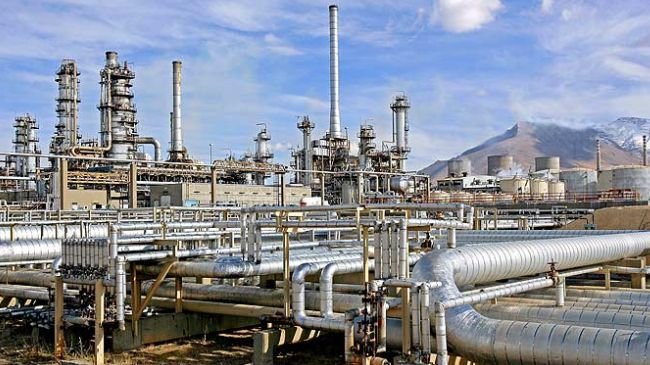
Suez Oil Processing Company (SOPC) refined nearly 1.4 million tons (mt) of crude to provide mazut, asphalt, Liquefied Petroleum Gas (LPG), diesel, and gasoline, said Chairman Mohamed Shehata El-Baz during the general assembly meeting convened to review the company’s work during the fiscal year (FY) of 2025/2026.
SOPC, wholly owned by the Egyptian General Petroleum Corporation (EGPC), also supplied marine bunkering fuels, including diesel and mazut, while providing feedstock to Alexandria Mineral Oils Company (AMOC) and Alexandria Specialty Petroleum Products Company (ASPPC), helping maximize the added value of petroleum products.
El-Baz noted that the final quarter of the fiscal year saw a significant increase in the actual volume of crude processed compared with the targeted level.
He said the company focused during the year on ensuring the safe operation of its production units, strengthening process safety, and improving refining costs. Energy efficiency and conservation projects implemented during the year generated savings of more than $275,000.
The chairman also highlighted progress in the development and implementation of the company’s coking and diesel production complex.
As he chaired the meeting via videoconference, Karim Badawi, Minister of Petroleum and Mineral Resources, stressed on accelerating the completion of the company’s coking complex, which is designed to convert lower-value petroleum products into higher-value products, increase domestic production, and reduce imports.
He noted that crude oil quantities to SOPC will increase in the coming period to support higher operating and production rates and make better use of its available capacities.
SOPC, the first national oil refining company in Egypt since 1921, was originally designed to process 3 million tons per year (mmt/y) of heavy Land Belayiem and Marine Belayiem crude oils.
SOPC refinery utilizes the delayed coking technology to minimize fuel oil production. The existing refinery was composed of four main processing complexes: two atmospheric distillation units (CDU-1 and CDU-2); a catalytic reforming complex, which contains naphtha hydro treating, naphtha reformer, and VRU; a delayed Coking Complex; and a lube oil complex, where all units are demolished except the vacuum distillation unit.
Source link
Author

- Ytv Market News
- Share-market news writer and analyst with deep experience covering equities, commodities, forex, and cryptocurrencies for readers in the USA, UK, Canada, and Australia. Ytv Market News delivers timely market updates, practical trading insights, and clear explanations of macro and company-level catalysts that move prices. Combines on-the-ground financial reporting with technical analysis, using concise charts and actionable ideas to help investors and traders make smarter decisions.
Latest entries
 Crypto NewsAugust 25, 2026Cosmos EVM chains told to halt after security incident
 Investing InsightsAugust 25, 2026The Real Cost of a Single Token: Jensen Huang’s “Five-Layer Cake” Deconstructs the AI Compute Ledger — BigGo Finance
 GermanyAugust 25, 2026FTSE indexes close higher as housing stocks shine
 CanadaAugust 25, 2026RBC creates unified Global Transaction Banking business, combining strengths across leading businesses


