
Japan Finance Minister (FM) Satsuki Katayama said in the Asian trading session on Tuesday that the government aims to balance fiscal sustainability and economic growth and communicate with markets on this stance. However, Katayama refused to provide more details on the fiscal budget. “Can’t comment on budget requests for Fiscal 2027,” Katayama said.
Additional remarks
Have received various opinions on scheme for JGBs for retail investors.
Likely to receive tax reform requests for JGBs targeting retail investors.
Will carefully discuss with relevant parties including IDP on tax reform measures for JGBs for retail investors.
No change in our stance that we hope for early opening of Strait of Hormuz, will respond properly to Iran-US peace talks considering impact on international society.
Market reaction
No major reaction is seen in the Japanese Yen (JPY) following remarks from Japan’s Katayama. As of writing, USD/JPY trades 0.13% higher to near 159.30.
Japanese Yen FAQs
The Japanese Yen (JPY) is one of the world’s most traded currencies. Its value is broadly determined by the performance of the Japanese economy, but more specifically by the Bank of Japan’s policy, the differential between Japanese and US bond yields, or risk sentiment among traders, among other factors.
One of the Bank of Japan’s mandates is currency control, so its moves are key for the Yen. The BoJ has directly intervened in currency markets sometimes, generally to lower the value of the Yen, although it refrains from doing it often due to political concerns of its main trading partners. The BoJ ultra-loose monetary policy between 2013 and 2024 caused the Yen to depreciate against its main currency peers due to an increasing policy divergence between the Bank of Japan and other main central banks. More recently, the gradually unwinding of this ultra-loose policy has given some support to the Yen.
Over the last decade, the BoJ’s stance of sticking to ultra-loose monetary policy has led to a widening policy divergence with other central banks, particularly with the US Federal Reserve. This supported a widening of the differential between the 10-year US and Japanese bonds, which favored the US Dollar against the Japanese Yen. The BoJ decision in 2024 to gradually abandon the ultra-loose policy, coupled with interest-rate cuts in other major central banks, is narrowing this differential.
The Japanese Yen is often seen as a safe-haven investment. This means that in times of market stress, investors are more likely to put their money in the Japanese currency due to its supposed reliability and stability. Turbulent times are likely to strengthen the Yen’s value against other currencies seen as more risky to invest in.
Source link
Author

- Ytv Market News
- Share-market news writer and analyst with deep experience covering equities, commodities, forex, and cryptocurrencies for readers in the USA, UK, Canada, and Australia. Ytv Market News delivers timely market updates, practical trading insights, and clear explanations of macro and company-level catalysts that move prices. Combines on-the-ground financial reporting with technical analysis, using concise charts and actionable ideas to help investors and traders make smarter decisions.
Latest entries
 Company NewsAugust 25, 2026Die PepsiCo-Aktie hält sich nach starken Zahlen
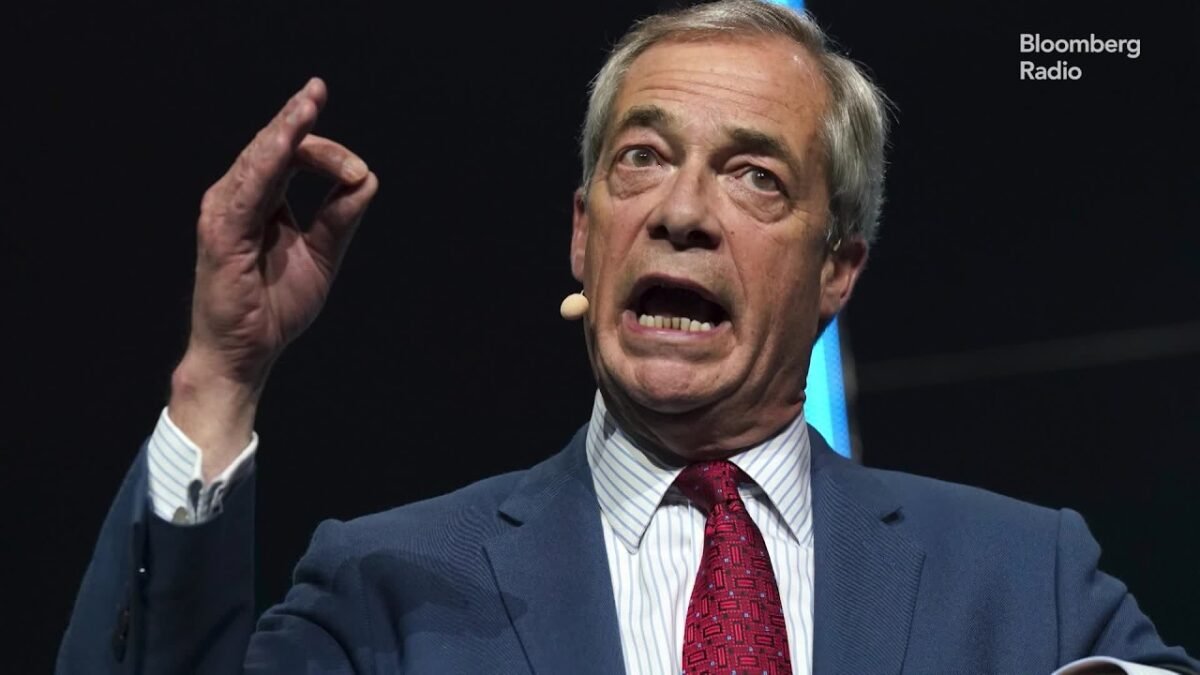 Stock Market VideosAugust 25, 2026Farage Wins By-Election But Count Binface Gets 26.7% Of Vote
- UkAugust 25, 2026UK’s Bryant “bored” of Stormont budget “sticking plaster” approach
 UsaAugust 25, 2026Press Release: Rep. Emanuel Cleaver Urges Trump to Reconsider Foreign Beef Import Plan