

Apple’s next flagship iPhone is shaping up to be its fastest and most power-efficient device yet, but the leap to cutting-edge chip manufacturing may come with a price tag that pushes the Pro Max well beyond the $1,200 threshold for the first time.
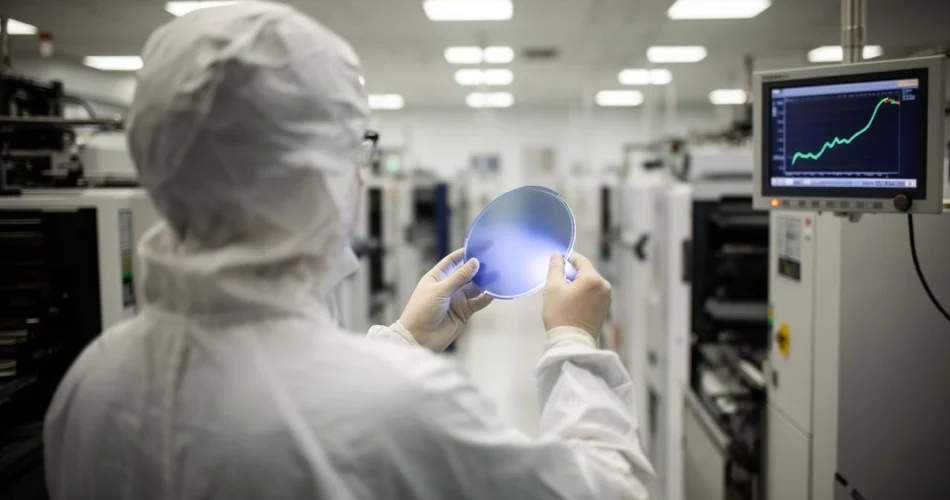
The iPhone 18 Pro Max, expected to be unveiled alongside the iPhone 18 Pro this fall, is widely rumored to debut the A20 Pro processor built on TSMC’s 2-nanometer process. That shift to Gate-All-Around (GAA) transistor technology promises an 18% performance boost over the A19 Pro and up to 30% lower power consumption, according to early reports from tech analysts and supply chain sources.
But those gains carry a cost. Industry estimates suggest production expenses for the device have climbed as much as 40%, driven largely by the price of TSMC’s next-generation fabrication. The starting price for the iPhone 18 Pro Max is now rumored at $1,399, a notable jump from the iPhone 17 Pro Max, which launched at $1,199 in the U.S. last year.
The A20 Pro: A New Performance Benchmark
The A20 Pro represents Apple’s first commercial move to 2-nanometer silicon, a manufacturing node that packs more transistors into the same die area while improving energy efficiency. The GAA architecture, which wraps the transistor channel with the gate on all four sides, offers finer control over current flow compared with the FinFET designs used in previous generations.
For users, that translates into faster app launches, smoother multitasking, and better sustained performance under heavy workloads such as gaming, 4K video editing, and augmented reality applications. The efficiency gains are equally significant: Apple is targeting up to 30% lower power draw, which could extend battery life meaningfully even as the device powers a brighter display and more demanding AI features.
Japanese tech outlet ASCII.jp reported that the A20 Pro is expected to deliver a particularly large jump in neural processing unit (NPU) performance, setting the stage for expanded on-device AI capabilities. Apple has positioned its custom silicon as a key differentiator, and the move to 2nm would keep the company ahead of Android rivals still transitioning to 3nm-class nodes.
TSMC itself has confirmed the underlying manufacturing timeline, independent of any Apple-specific detail. The foundry says its N2 node entered volume production in the fourth quarter of 2025, and CEO C.C. Wei has forecast a faster ramp through 2026 driven by both smartphone and AI/HPC demand. TSMC’s own technical materials cite roughly a 15% speed gain at the same power draw for N2 versus its previous N3E process — a more conservative figure than the 18% performance jump cited by supply-chain analysts for the A20 Pro specifically. That gap is a reminder that generic process-node numbers and a specific chip’s real-world gains are not the same thing; Apple typically layers architectural changes on top of the raw process improvement, and neither figure will be confirmed until launch.
Pricing Pressure Mounts Across the Industry
The rumored $1,399 starting price reflects broader cost inflation in the semiconductor supply chain. TSMC’s 2nm wafers are substantially more expensive than the 3nm process used for the A19 Pro, and those costs are being passed downstream to device makers.
Apple is not alone in adjusting its lineup. Google’s Pixel 11, announced in August, eliminated its 128GB tier and raised the price of its top-end Pixel 11 Pro XL by $100. The pattern suggests a broader industry shift toward higher entry prices for flagship devices as AI-driven demand pushes chip costs upward.
For the iPhone 18 Pro Max, the pricing picture is complicated by storage configurations. One scenario circulating among analysts suggests Apple could drop the 256GB tier on Pro models, making 512GB the new entry point. If that happens alongside a $100 increase on the Pro Max specifically, the most popular configuration could reach $1,499 in the U.S.
To put the rumored $1,399 figure in context, here is how the Pro Max starting price has moved since Apple introduced the line in 2019:
| Model | Year | Starting Storage | U.S. Starting Price |
|---|---|---|---|
| iPhone 11 Pro Max | 2019 | 64GB | $1,099 |
| iPhone 12 Pro Max | 2020 | 128GB | $1,099 |
| iPhone 13 Pro Max | 2021 | 128GB | $1,099 |
| iPhone 14 Pro Max | 2022 | 128GB | $1,099 |
| iPhone 15 Pro Max | 2023 | 256GB | $1,199 |
| iPhone 16 Pro Max | 2024 | 256GB | $1,199 |
| iPhone 17 Pro Max | 2025 | 256GB | $1,199 |
| iPhone 18 Pro Max | 2026 (rumored) | 256GB (rumored) | $1,399 (rumored) |
The last starting-price increase, in 2023, came bundled with a doubling of base storage from 128GB to 256GB, softening the effective cost per gigabyte. If the $1,399 rumor holds and Apple keeps 256GB as the entry tier, the jump would instead be a $200 increase with no offsetting storage bump — the largest same-storage price hike in the Pro Max line’s seven-year history. (If Apple instead moves the entry point to 512GB, as one circulating scenario suggests, the extra storage would offset part of that increase.)
Japanese buyers face an additional squeeze from currency effects. Based on a hypothetical exchange rate of 160 yen to the dollar plus consumption tax, a 512GB iPhone 18 Pro Max at $1,499 would price out around 263,800 yen. That would represent a jump of roughly 70,000 yen (approximately $440) from the iPhone 17 Pro Max’s entry price in Japan last September, according to calculations cited by ASCII.jp.
Apple raised prices in Japan in July for the iPhone 17 series, but that adjustment was attributed to yen depreciation rather than a change in U.S. pricing. Whether the company holds U.S. prices flat for the iPhone 18 lineup or implements a global increase remains an open question.
What Else to Expect
Beyond the chip, the iPhone 18 Pro Max is rumored to introduce a variable aperture camera system, a feature that would give users manual control over depth of field and light intake. Variable aperture mechanisms have appeared on Android devices from Xiaomi and ZTE, but this would mark Apple’s first implementation. Some reports suggest the feature could be exclusive to the Pro Max, potentially justifying a price premium over the smaller Pro model.
The modem situation is also in flux. Apple has been working to replace Qualcomm components with its own in-house silicon, following the pattern set by the iPhone Air lineup. The iPhone 18 Pro models could adopt Apple’s second-generation modem, referred to informally as the C2, with potential enhancements to satellite communication capabilities. There is also speculation that Japanese models may finally gain millimeter-wave 5G support, aligning with carrier investments in high-band spectrum.
On the design front, the iPhone 18 Pro and Pro Max are expected to retain the horizontal camera bar and aluminum unibody frame introduced with the iPhone 17 Pro. Display sizes are likely to stay at 6.3 inches and 6.9 inches respectively. Color options remain speculative, with some reports pointing to silver, light blue, dark cherry, and dark gray, though fans of last year’s breakout Cosmic Orange may be hoping for something bolder.
Launch Timing and Other Products
Apple’s September event is expected to land on September 9, a Wednesday, based on the U.S. Labor Day holiday falling on September 7 this year. Pre-orders would likely open the following Friday, September 11, with retail availability around September 18. The timing could shift, however, given that September 9 coincides with the NFL season opener, which commands significant U.S. media attention.
Notably, the standard iPhone 18 may not appear at the fall event at all. Multiple reports suggest Apple will split its lineup, announcing only the Pro models in September and holding the standard iPhone 18 for a spring 2026 launch alongside the next budget-tier device. The second-generation iPhone Air also remains uncertain, with conflicting reports on whether it will be refreshed this cycle.
Other products expected in the fall include the Apple Watch Series 12, which is likely to be a minor update, with some speculation about the return of a ceramic case option for a premium tier. MacBook models powered by the M6 chip and a new iPad mini are more likely to arrive in October or later, according to the Japanese report.
For consumers weighing an upgrade, the calculus has shifted. The iPhone 18 Pro Max promises meaningful gains in performance, efficiency, and camera capability, but the price increase raises the bar for what constitutes a compelling upgrade. Users who rely on their phones for demanding tasks may find the A20 Pro’s improvements worth the premium, while those with lighter usage patterns may be better served by the standard iPhone 18 or existing models.
The decision ultimately comes down to how much value individual buyers place on being first in line for Apple’s most advanced silicon. With production costs climbing and competitors following a similar pricing trajectory, the era of the sub-$1,200 flagship may be drawing to a close.
Source link
Author

- Ytv Market News
- Share-market news writer and analyst with deep experience covering equities, commodities, forex, and cryptocurrencies for readers in the USA, UK, Canada, and Australia. Ytv Market News delivers timely market updates, practical trading insights, and clear explanations of macro and company-level catalysts that move prices. Combines on-the-ground financial reporting with technical analysis, using concise charts and actionable ideas to help investors and traders make smarter decisions.
Latest entries
 UsaAugust 24, 2026$OPEN stock fell 4% this week. Here’s what we see in our data.
 Crypto NewsAugust 24, 2026NVIDIA Corporation stock: Uptrend holds, $190 downside risk looms before earnings
 GermanyAugust 24, 2026Europe EV market share tops 25% in July as France, Germany drive growth
 JapanAugust 24, 2026US-Canada trade talks collapse over new tariffs


